
It’s the most exciting time in the sports world, where just about every sport we love is either winding up or coming down to a conclusion. In motor racing, we’ve still got a lot of good weeks ahead, and it’s some of the best racing to come both in and out of NASCAR. With that, let’s open the mailbag back up and see what’s on our mind going into the golden autumn weeks.

Question from @Sp000nman
Will the sport ever reach its popularity from the 90s/earlier 2000s again?
Answer: That’s a difficult question to answer depending on how you measure popularity. If your measure is money, we’ve already reached it and exceeded it. Races are in new and exciting places and more famous people are investing in and talking about our sport reverentially than ever. If you measure comes from NASCAR being the number one motorsport on the lips of the general racing public, that’s just not going to happen. There’s been an enrichment of the other brands of motorsport in America, and local racing all the way to Formula 1 is more accessible than ever, which is undoubtedly a good thing. With that, people will be seeking a more varied buffet style of racing consumption, and simply won’t rely on one long race on a Sunday to properly fulfill them.
There’s no doubt that NASCAR could use more personality out of some in the field, and that the fan engagement has fumbled mostly through internal struggle. On the track however, we trade good races for bad just as much as we did during those glory days, there’s just more out there to foster our love of motor racing.
Question from @DebNicole3
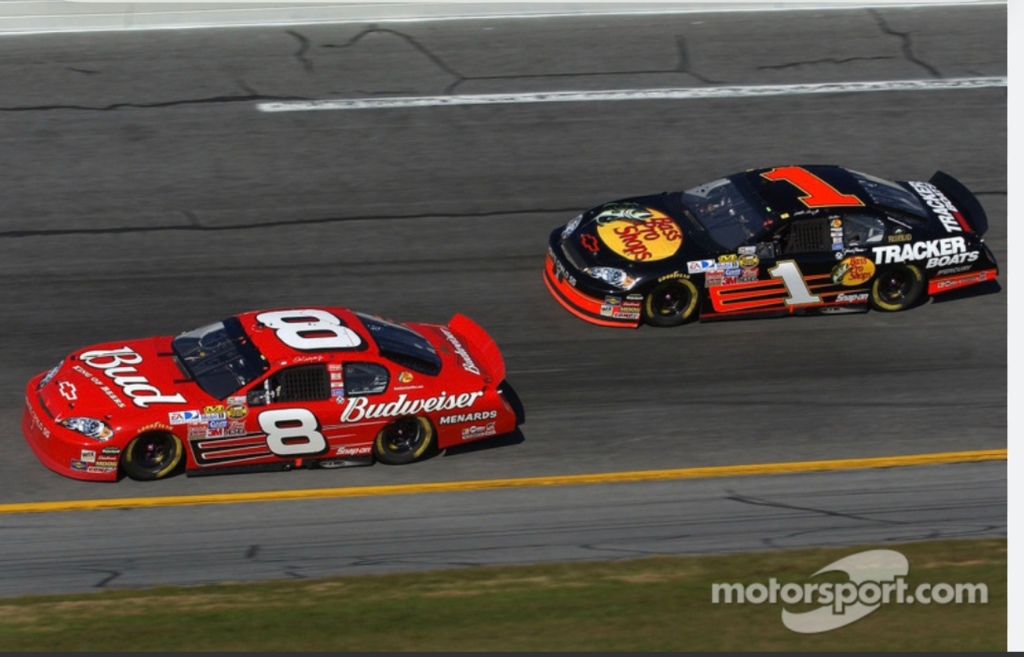
Would DEI have been a powerhouse if that one lady had given it to its rightful owners?
Answer: The nicest way to say it: the team was woefully mismanaged and Teresa Earnhardt had her priorities way out of whack when handling the team in and after the Dale Jr era. I won’t claim to know what was in her mind or anyone else’s, but I can only imagine that the idea was that the legacy of the late Dale Earnhardt was supposed to carry with the organization and not the with people that made it work…in Teresa’s mind anyway. Without Dale Jr, and without the names and sponsors, the DEI name meant next to nothing, and to that we said “good riddance.”
Question from @RexSpidersaurus
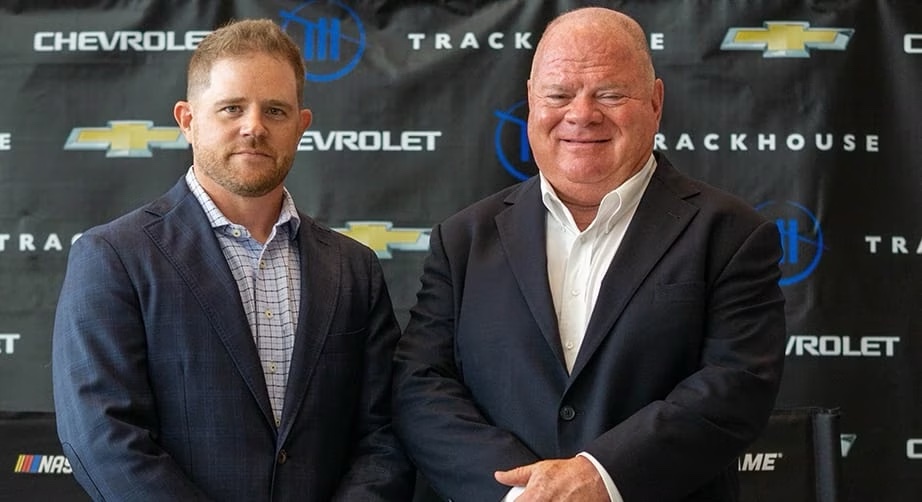
Would Chip Ganassi Racing still be in NASCAR if Kyle Larson didn’t happen or would the outcome be the same since they couldn’t win championships?
Answer: When you say Kyle Larson “didn’t happen” I can only assume we’re talking specifically about the racial slur incident, and to that I’d say it’s a big part of it, and probably made the transition for Chip Ganassi easier. Let’s imagine the world where the Kyle Larson incident didn’t happen. Larson was still going to be a free agent after 2020 and unless they somehow won the championship that year it’s unlikely he’d have stuck around with Ganassi. There are a million dominos in 2020 that caused all sorts of weird things to happen, but it’s likely that Ganassi would have been down a superstar driver no matter what happened. It’s hard to say how many of those 2020 dominos caused Justin Marks to make that bold proposal to Ganassi, but it feels like that was his plan regardless, and history may have gone mostly the same either way.
Question from @nascar_7_
Would Adam Petty have been better than Richard?
Answer: No. There is no comparison to Richard Petty. The greatest drivers of all time don’t even compare to Richard Petty in both good ways and bad. We don’t run 90 races a season anymore, and we have tighter technical rules and procedures to actively prevent the next Richard Petty from happening. BUT, if you’re asking how Adam Petty would have held up in the course of history, I choose to live in the world where Adam Petty would have been the real deal, and would have regained and kept Petty Enterprises in the higher reaches of NASCAR. In 2023 Adam would be in his early 40s and I see no reason to say he wouldn’t have a few dozen race wins and maybe a championship to boot. Petty could have merged with another team in a more lucrative way than we saw, and Kyle wouldn’t have had to drive well beyond the time it was to retire gracefully. In short, everything would have been better, and it’s a loss we can feel to this day and beyond.
Question from @KingJamesKD35
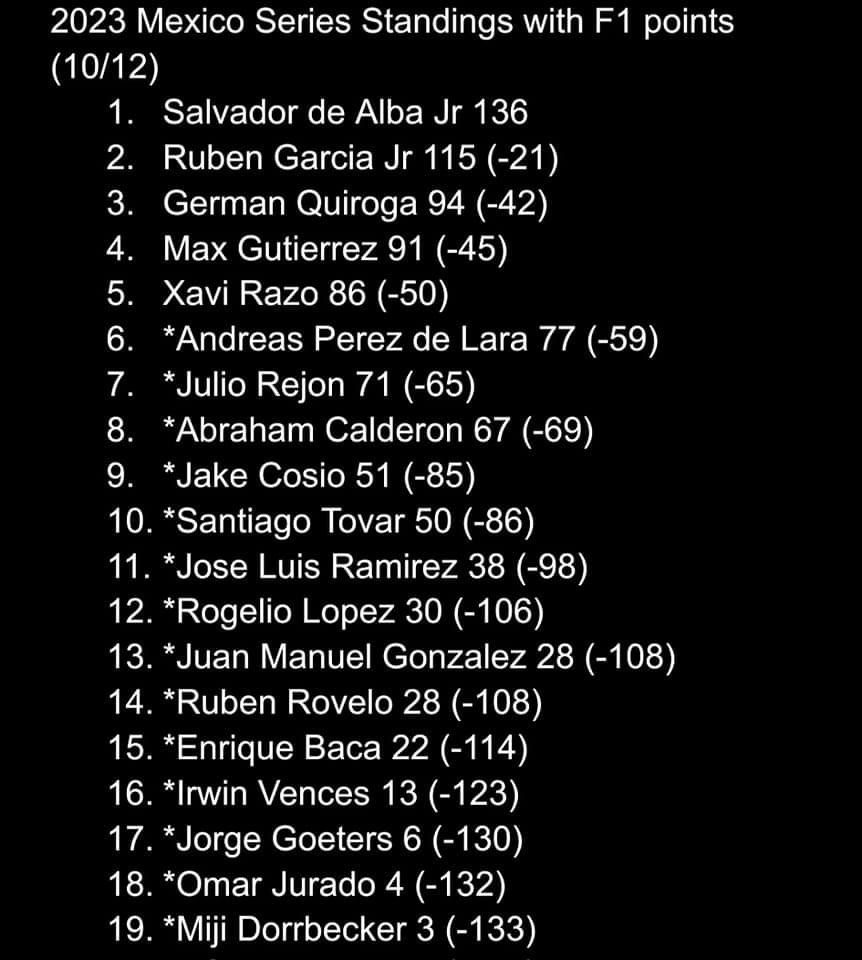
Can you actually determine a potential Cup champion in the Chase format when you know everyone would race differently? (Example: Jeff Gordon is a 7 time champ in the Winston Cup format)
Answer: No, and it’s a neat exercise when done strictly for fun, but an exhausting ordeal when trying to put any sincerity behind it. There’s some truly great content out there, like re-doing Winton West point tables with 1970s F1 points scoring, but when considering legacies it’s just misinformed nonsense.
When you have a completely different playoff format, or no format at all…whichever scenario you’re running you have to consider not only the things that would happen, but just as importantly the things that do NOT happen. Think about the late race pit stops that happen or don’t, think about the cautions that come from restarts that may never have occurred if a driver needed to race differently. We can and should examine the success rate of dominant drivers when put into a sudden death style of playoff racing and make an informed opinion about the quality of that format, but we sure as hell can’t go changing history.
Question from @iblamethedingos
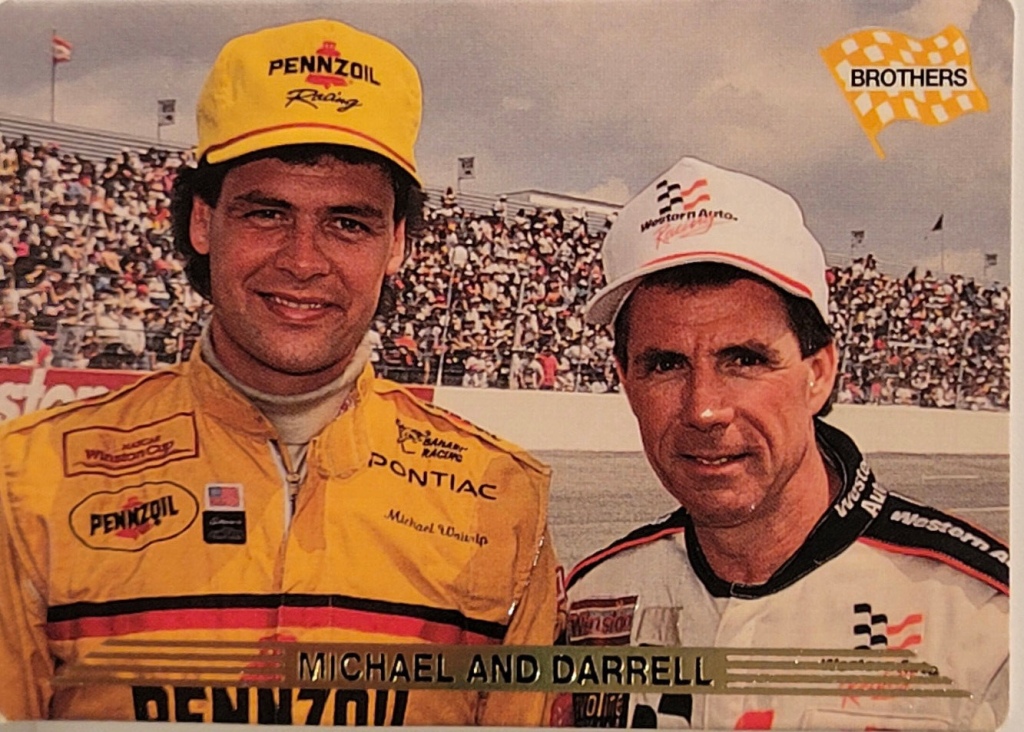
When two brothers both race professionally, how often are the ranges of success different and how often are they the same?
Answer: That’s a great question to sink our teeth into, and maybe we’ll break that down into a longer article some day. There’s a TON of different stories to examine. For the purposes of this, let’s consider the two basic types of success variants that are worth looking at:
For one, let’s think about the times when both are unquestionably good or even great. Kyle and Kurt Busch are both Hall of Famers. While their resumes are different, Donnie and Bobby Allison are both all-timers. Terry and Bobby Labonte are both great champions. Ward and Jeff Burton had successful careers, and certainly a few others could go in the mix.
Other times, there’s a very clear difference in success. Michael Waltrip had a very long career, and two Daytona 500 wins is nothing to sneeze at, but Darrell Waltrip is simply one of the best ever. Phil Parsons has a cup win and a fine history of broadcasting like his big brother, but Benny Parsons is in the rarified air among the great ones. Rusty Wallace is one of the best, and while brothers Mike and Kenny had very respectable accomplishments, only one of them will be in the Hall of Fame. Brian Keselowski never really had the opportunities for big time Cup racing but will have a brother enshrined in Charlotte in the very near future.
Is there a reason for things to go one way or another? Looking at the data it’s impossible to say for sure, but it seems the most varied success comes when siblings race in different eras. While Darrell and Michael Waltrip raced each other, big bro raced in a wholly different era when making his way in the sport, and the same can be said for the Parsons brothers and the Wallaces. Moreover, it seems the instances where both were great came when they shared an era…in fact all 4 examples above have them as driving contemporaries. Does the success of an elder statesman yield opportunities for less talented siblings in the decades that follow? Certainly something to look at, and I think we can extrapolate that to fathers and sons someday to see what the stats tell us.
One foot note, while they are actually cousins, Chris Buescher looks like he might be the real deal, but to be honest I for a couple years thought he changed his first name from James, as the 2012 Truck Champion simply fell off the face of the earth for some reason. I’ll never quite understand what happened there.
Question from @3Aholic
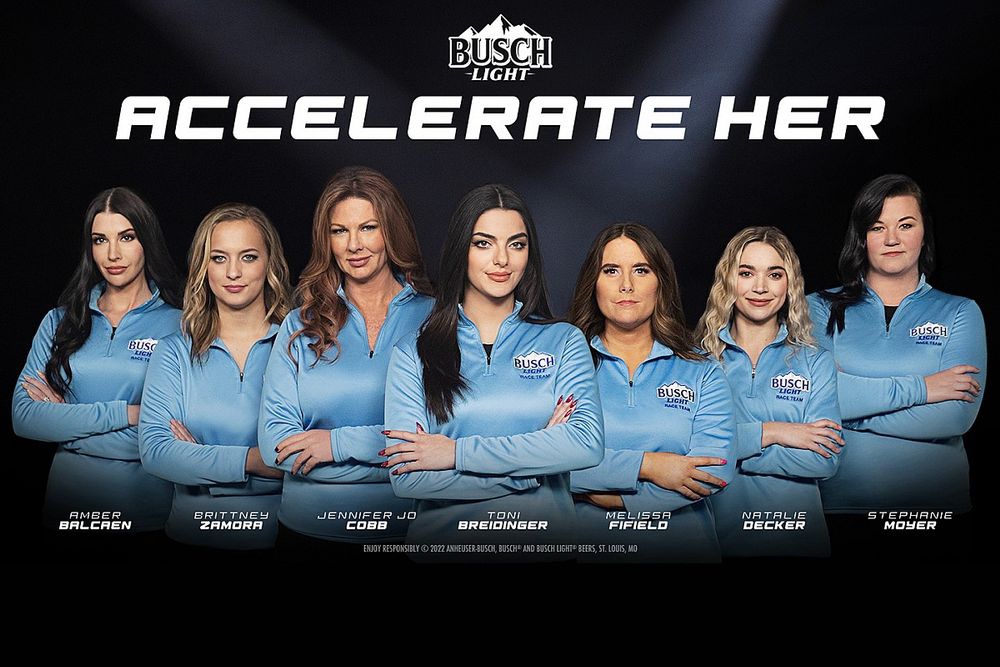
Are men really superior race car drivers or is it just a numbers thing?
Answer: The easy answer is “of course not,” there’s no evidence that men are superior by any sort of default. Certainly, elements of our favorite sport tend to be more easily accessible for men, and the physicality of motor racing can also be favored to people who can rely on brute force, but there’s a lot more going on than that. In most cases at the professional level, female racers can’t just be “racecar drivers,” They have to be “women drivers” with a set of decades old baggage before they even turn a damn lap. If she’s good looking, she’s “only there because she’s pretty.” If she’s related to anyone in motorsports she’s “only there because of her name” and so on. In the 2020s sense, I think the reason we’re still wondering about the superiority of one type of person over the other comes from the inherent inferiority we unfairly attached to women from the start.
Make no mistake, this isn’t just a fan issue. Teams and sponsors really do take things into account that have nothing to do with racing. While they do that with plenty of men, it’s almost comical how that’s been done historically with women. Still, there’s promising talent rising through the ranks on the pavement, dirt, and road sides of racing, and if we all come in and start putting the best drivers in the best places, we’ll have something really special. Part of what I love most about racing is how it ideally can be a “come as you are” sport, and it’s beyond high time that we take advantage of it.
Follow Matt on Twitter for all things racing and drop him a line for the next Mailbag!
 The Slow Restart